
Craig County Arrest Records and Court Charges
An arrest record in Craig County is the law enforcement record of a person taken into custody. It names the arresting agency, the date and place of the arrest, and the booking that follows at the jail. An arrest by itself is not a finding of guilt. After the arrest, the District Attorney reviews the case and decides which formal charges to file. Once those charges reach the Court Clerk, they open a court case and become the charge record. The charge record is the part most people are really after when they look up arrest records.
The two records live in different places. Booking detail sits on the sheriff and jail side, where the Craig County Justice Center tracks who is in custody. That roster and booking data is covered on the Craig County inmate records page. The court charges after arrest sit on the court side. A prosecutor files them, and the case docket tracks them. The full case file, with pleas, hearings, and the final outcome, is covered on the criminal court records page. Knowing this split tells you which office to call first.
How to Find Craig County Arrest Records and Charges
Craig County court charges are searched through two public Oklahoma systems. The first is On Demand Court Records, known as ODCR, which lets you search Craig County District Court cases by party name, case type, or case number. The second is the Oklahoma State Courts Network, or OSCN, which offers a case number lookup and district court reports. Both show the charges filed in a case and the status of each one. Neither shows live jail booking data. For that, use the sheriff inmate roster instead.
- Open the ODCR search page and set the court to Craig.
- Search by the defendant name in Last, First format, or enter the full case number.
- Open the matching case and read the offense or cause lines, which list each charge.
- Check every charge for its statute, its level, and its current status.
The case docket is free to view on both portals. Document images and some advanced tools on ODCR require a paid subscription or state bar access. Older or restricted cases may show only limited fields, so the Court Clerk at the courthouse can confirm what the file contains.
Who Files Charges After a Craig County Arrest
Charges are filed by the prosecutor, not the police. In Craig County, that prosecutor is the District Attorney for District 12, Matt Ballard, whose office also serves Mayes and Rogers Counties. The Craig County office sits on the second floor of the courthouse at 210 W. Delaware in Vinita. Prosecutors review the arrest, the reports, and the evidence. They can file the charges an officer recommended, file different charges, add counts, or decline to file at all. This screening step is why an arrest does not always turn into a court charge.
Once the District Attorney decides to proceed, the office files a charging document with the Court Clerk. That filing opens the case and assigns a case number. Misdemeanor and felony cases each carry their own prefix. From there, the charges appear on ODCR and OSCN as the offense or cause for the case. The prosecutor can later amend a charge, reduce it, or move to dismiss it as the case develops.
Most Craig County charges are state charges handled in District Court. Some conduct is charged federally instead. Craig County falls inside the U.S. District Court for the Northern District of Oklahoma, and federal crimes there are prosecuted by the United States Attorney. The federal court lists its locations and contact details on the Northern District of Oklahoma homepage.
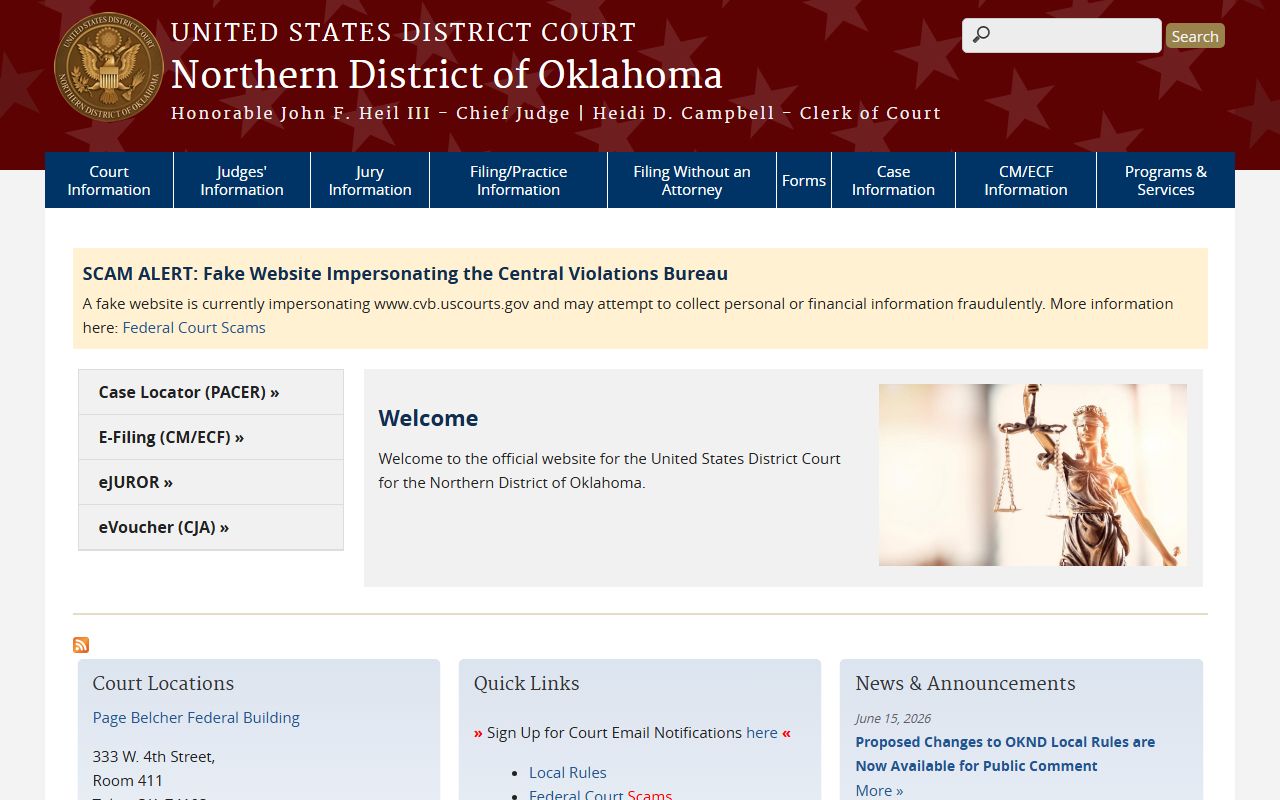
Federal cases are tracked apart from the Craig County District Court docket, so a federal charge will not appear in ODCR. Federal jurisdiction over the county is set by statute. Under 28 U.S.C. § 116, Craig County is placed in the Northern District of Oklahoma, and Vinita is named as a place where that court may be held.
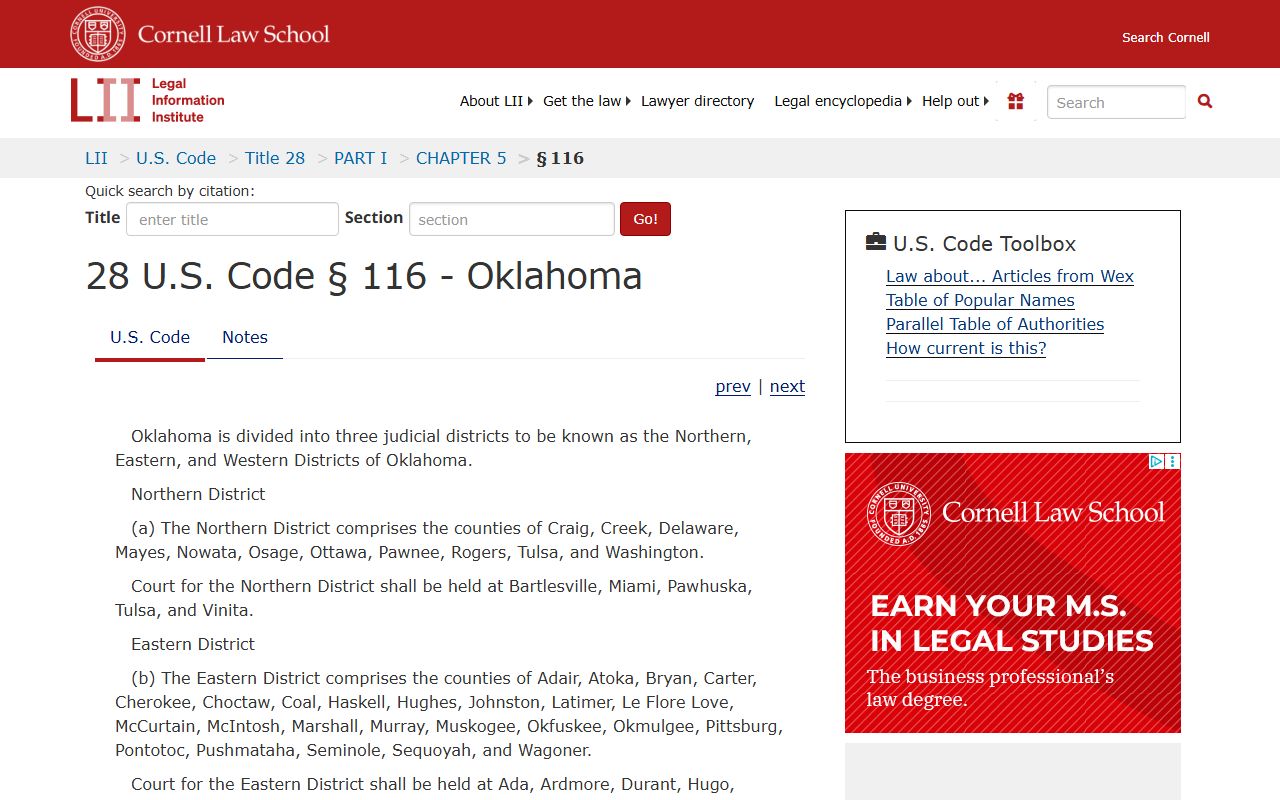
This is why a serious federal charge tied to Craig County can still be heard close to home rather than only in a distant city. For day-to-day arrests, though, the state District Attorney remains the office that files and shapes the charges.
How Craig County Charges Get Filed: Complaint, Information, and Indictment
The charge record begins with a charging document. Three main types start a criminal case in Oklahoma. A complaint is the sworn accusation that opens most cases. An information is the formal charge a prosecutor files, common for felonies. An indictment is a charge returned by a grand jury, used for some serious felonies. Each one does the same basic job. It states the charge and starts the case.
| Complaint | Information | Indictment | |
|---|---|---|---|
| Filed By | Officer / Prosecutor | Prosecutor | Grand Jury |
| Common For | Misdemeanors | Many felonies | Serious felonies |
| Starts | The case | The case | The case |
The document type does not change where you search. All three open a Craig County District Court case that shows up on ODCR and OSCN once filed.
Craig County Charge Status and What It Means
Charges change as a case moves. A prosecutor can amend a count, reduce it to a lower level, add a charge, or drop it. The docket records each change. The status of a charge tells you where it stands right now, not where it started. A few terms come up again and again in Craig County case records.
| Status | What It Means |
|---|---|
| Pending | The charge is filed and the case is still open. No final outcome has been entered. |
| Amended / Reduced | The prosecutor changed the charge, often to a lower level or a different count. |
| Dismissed | The court dropped the charge. It will no longer be prosecuted in that case. |
| Nolle Prosequi | Latin for will not prosecute. The District Attorney chose not to pursue the charge. |
Note: A charge that is dismissed or set aside can still leave a record, so a later expungement step may be needed to clear it from public view.
Craig County Charge Codes and Severity Levels
Every charge points back to a statute. The offense or cause line in a Craig County case names the crime and often the law it violates. Oklahoma sorts charges by severity. A felony is the most serious level and can carry a year or more in state custody. A misdemeanor is a lesser offense with lighter penalties. Case prefixes signal the level at a glance.
A felony case carries the CF prefix. A misdemeanor case carries CM. A single arrest can produce several charges, so one case number may list more than one count. Each count gets its own offense line and its own status. Reading each count and its level matters more than counting the charges. A case with three counts is not the same as three convictions.
Charges vs. Convictions in Craig County
Being charged is not the same as being convicted. A charge is an accusation. The prosecutor only needs probable cause to file it. A conviction comes later. It requires a guilty plea, a no contest plea, or a verdict that proves the case beyond a reasonable doubt. Many charges never become convictions. They get reduced, dismissed, or resolved through a deferred sentence.
| Charge | Conviction | |
|---|---|---|
| Stage | Accusation | Verdict or plea |
| Burden of Proof | Probable cause | Beyond reasonable doubt |
| Public Record | Yes | Yes |
Both a charge and a conviction can appear in a public record. The difference is the outcome, not the visibility. A reader who treats every charge as a conviction will get the case wrong.
Sealed and Expunged Craig County Charge Records
Some Craig County charge records are removed from public view. Oklahoma allows two related steps. Sealing limits public access to a record. Expungement goes further and treats the record as if it never existed for most purposes. Eligibility is set by statute, and the Oklahoma State Bureau of Investigation warns that it cannot decide in advance whether a person qualifies.
| Sealed | Expunged | |
|---|---|---|
| Visibility | Hidden from public | Destroyed / treated as never existed |
| Law Enforcement | Limited access | Very limited |
| Eligibility | Set by the sealing procedure in 22 O.S. § 19 | Set by the categories in 22 O.S. § 18(A) |
The process usually starts with a petition filed in the court that holds the record. For a Craig County case, that is the Court Clerk for the District Court file. After service on the right agencies, a judge can grant the order under the sealing procedure in 22 O.S. § 19. The order is then used with the court, the OSBI criminal history, and any law enforcement record.
Statewide Charge and Criminal History Lookups
State charges do not stay only in the county file. They roll up into a statewide criminal history kept by the Oklahoma State Bureau of Investigation. OSBI is the official source for a full Oklahoma criminal background. Its expungement page points to 22 O.S. § 18 for what can be removed. A Craig County charge can appear there even after a local case closes.
Federal charges are searched in a different system. Public Access to Court Electronic Records, known as PACER, is the national portal for federal case files. You can reach it on the PACER website.
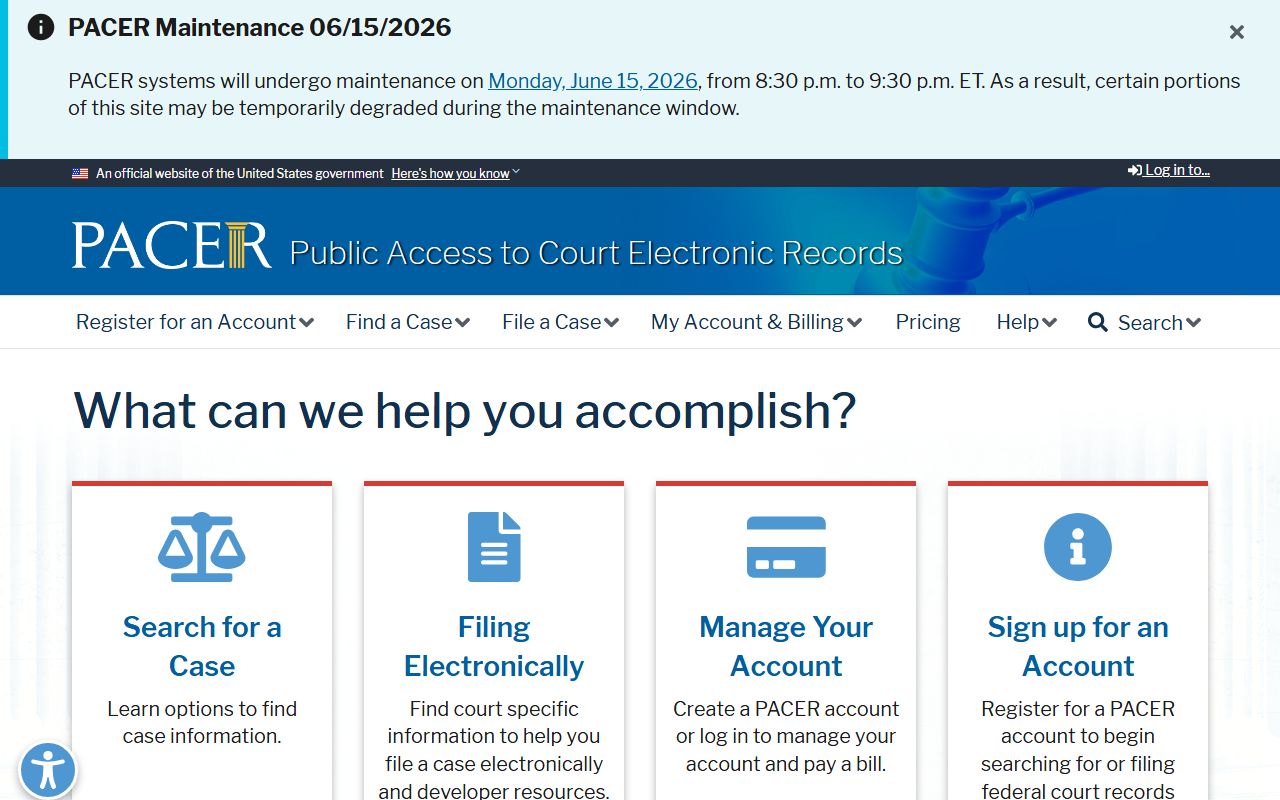
Because Craig County sits in the Northern District of Oklahoma, federal charges tied to the county are found through PACER rather than the state portals. Reviewing or filing federal records is not free. The Northern District publishes set rates for copies, certifications, and filings on its court fee schedule page.
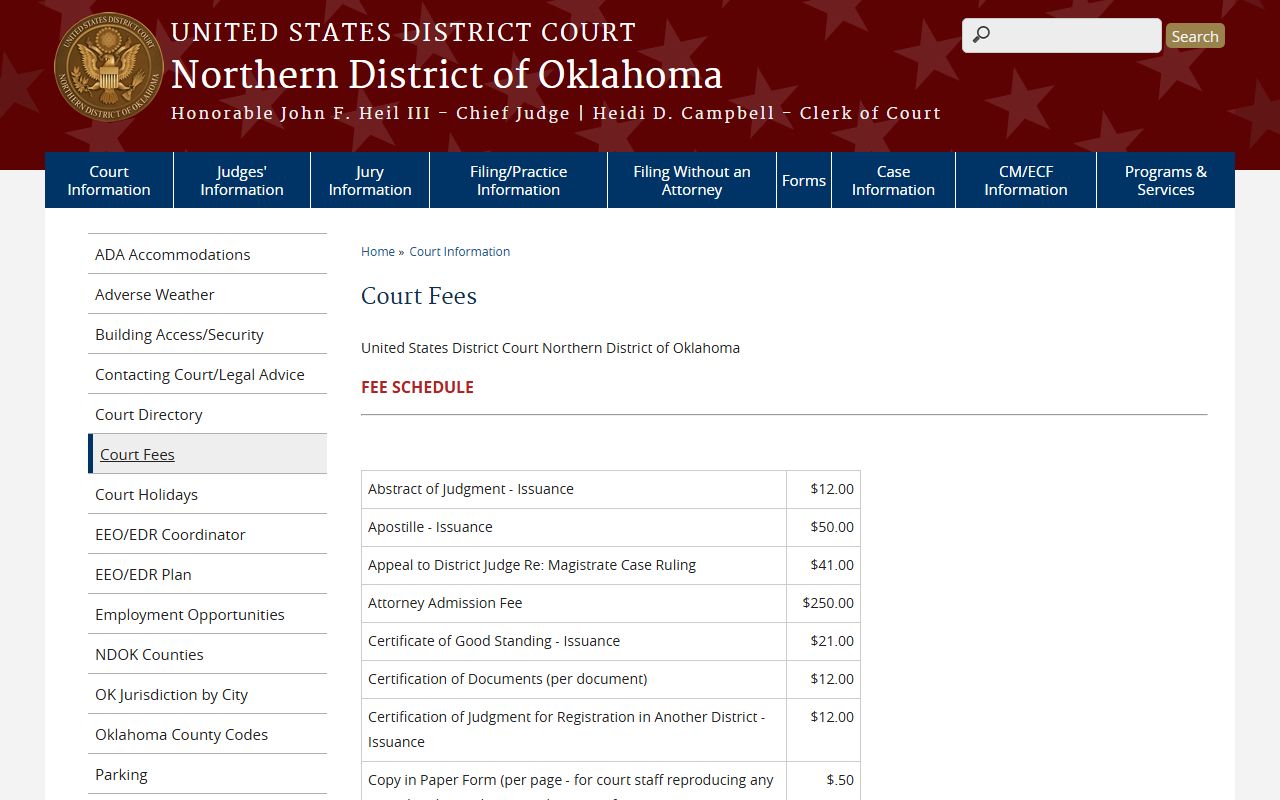
Those federal fees are separate from any cost charged by the Craig County Court Clerk for state case copies. Two charge records for the same person can sit in two systems at once, one state and one federal.
Background Check Considerations
People look up charges for many reasons. A casual name search on a court portal is fine for personal knowledge. A formal background check for hiring, housing, or credit is different. Those uses fall under the federal Fair Credit Reporting Act, which sets rules for accuracy, consent, and dispute rights. A free docket search does not meet those rules. For an FCRA-regulated decision, use a screening company that follows the law and pull the official record from the Court Clerk or OSBI.
Important: This site is not a consumer reporting agency under the Fair Credit Reporting Act, and its information cannot be used for employment, housing, credit, or other FCRA-regulated screening.
Restricted Charge Records in Craig County
Not every Craig County charge record is open to the public. Several categories are restricted by law. Juvenile charges are generally confidential. Sealed and expunged charges drop out of public search results. Records tied to an ongoing investigation may be withheld until a case is filed. Oklahoma's Open Records Act under 51 O.S. § 24A.5 keeps most court records open, but it carves out specific confidential categories.
A blank search result does not always mean no charge exists. It can mean the record is restricted, sealed, or simply not online. When a charge record matters for a legal step, the safest path is a direct request to the Court Clerk for the certified court file.